
Family life gets loud sometimes—not just with noise, but with emotions. Screen time can be one of the biggest pressure points. When it’s time to turn screens off, everyone can feel on edge.
At The Cows Go Moo!, we’re not about punishment or power struggles. We believe guidance works best when it’s Kind, Firm, and Consistent—what we call the KFC Guide. That approach helps kids learn self-regulation while keeping relationships intact.
One simple tool that supports this is something we call a MooMent.
What is a MooMent?
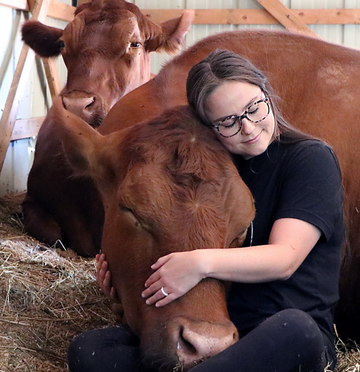
A MooMent is a pause for the adult, not the child. Take A MooMent!
It’s the moment you take before engaging—especially when you feel yourself getting frustrated. A MooMent might be a breath, a pause, or a quiet reminder to yourself to slow down before speaking.
MooMents help caregivers stay calm so they can guide instead of react.
When I’m not writing and illustrating books or working on songs for TCGM, I work as an adolescent counselor. Much of my work focuses on helping kids and families move through hard moments without yelling, shame, or power struggles. The heart of TCGM has always been the same: support families and bring more fun and connection into everyday life.
That shows up clearly during screen-off transitions.
A Kind, Firm, Consistent Way to Move Off Screens
Helping kids turn screens off starts before the screen even turns on.
Step 1: Set the expectation ahead of time
Before screen time begins, be clear:
“You have 30 minutes. When the bell rings, it’s time to turn the screen off and move on.”
This removes surprises later.
Step 2: Give a warning
Most kids need time to shift gears.
-
A 10-minute warning works well
-
A 5-minute reminder can help younger kids
Use the same words each time.
Step 3: Use a neutral cue
Instead of raising your voice, let something else do the work:
-
A timer
-
A song
-
A bell (yes… a cowbell works great)
The cue signals the transition, not your emotions.
Step 4: Take a MooMent before engaging
If your child resists, pause first.
Lower your voice.
Repeat the expectation calmly:
“The bell rang. It’s time to turn it off.”
Firm doesn’t mean loud.
Step 5: Allow self-regulation
Give your child a brief chance to do it themselves:
“You can turn it off now, or I can help.”
This teaches responsibility without yanking the screen away.
Step 6: Praise the effort
Notice the regulation, not just compliance:
-
“That was hard, and you did it.”
-
“Nice job moving on.”
-
“Thanks for turning it off.”
Step 7: Lead into the next activity
Transitions work best toward something:
-
Homework
-
Play
-
Chores
-
Creative time - like reading The Cows Go Moo!, Coloring in the book, or playing the Moosic!
Add More Cowbell (Make It Fun)
Rhythm helps regulate nervous systems—kids and adults alike. Songs, repetition, and humor go a long way.
Many families already do this naturally:
-
Singing during cleanup
-
Turning chores into games
-
Using the same silly song every night
That’s what we mean by “add more cowbell.”
More rhythm. More play. Less pressure.
“Big feelings happen. Let’s take a MooMent… then we’ll moo-ve on.”
— Beaker 🐄
Screen-off transitions don’t have to be a battle. With clear expectations, calm guidance, and a little rhythm, they can become just another part of the family flow.
When things get tense, take a MooMent.
Add more cowbell.
And let’s moo this—together!